
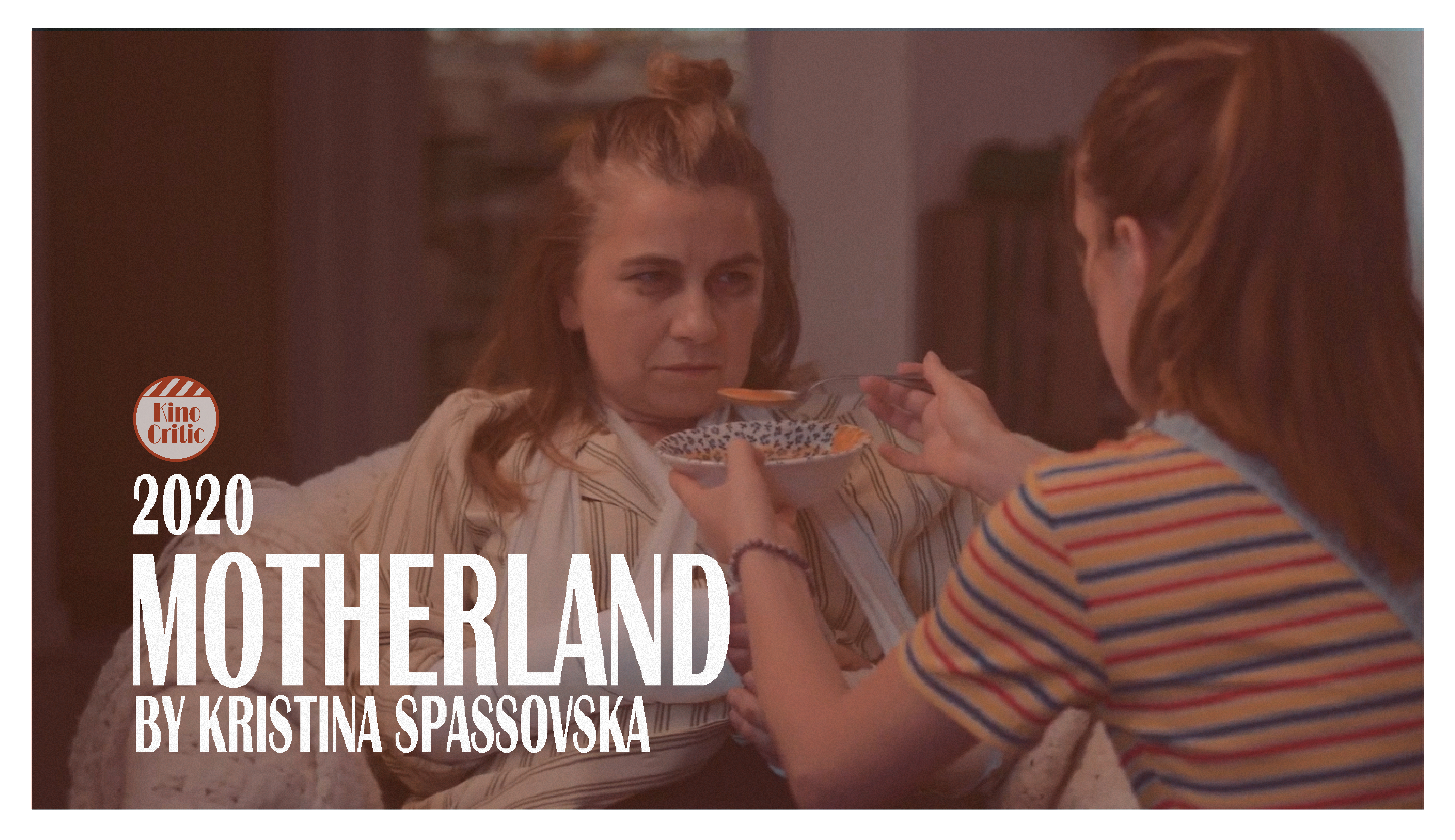
After an accident, a young woman is forced to stay home and be her mother’s two hands.
A family made up of an emigrant mother and daughter is on the verge of being split apart, just as the moment arrives for the daughter to set out on her own path. Right at this fateful moment, unexpected circumstances halt what’s unfolding, and everything left unspoken between mother and daughter comes to the surface. Kristina Spasovska’s film “Motherland” explores the dynamic between homeland and life abroad, as well as the emotional challenges that living in a new place brings, embodied through the figures of mother and daughter.
The film’s narrative is distanced from authorial bias. This is by no means a story in which one character can be cast as the antagonist and another recognized as the protagonist. Each of the figures in the cinematic narrative is rendered realistically, authentic in their intentions, and, as in life, justified according to their own point of view. Of course, different stories call for different authorial approaches, but here the absence of overt intervention is an advantage, since it avoids the unintentional slide into cliché. If you can name a film in which the daughter matures after having behaved rudely, impulsively, and immaturely toward her parents, while the mother quietly and patiently, with great love, waits out this moment, then my previous sentence makes sense. In this short film, however, the roles are reversed.
Lena becomes mature and dignified in her mother’s hands as she recovers. Despite wanting to leave as soon as possible, she doesn’t neglect the emotional needs of her sole parent, recognizing the intentions behind her behavior. Maria, Lena’s mother, for her part, with her cold tone and curt sentences, behaves in a rather infantile manner rather than a wise one. Even so, we can understand what’s happening — if we accept that it was she who initiated the emigration to a place where she now feels like a stranger, then it’s natural for her to see herself in her daughter and to vent her resentment onto her. Behind these complex feelings, without fail, lies a great deal of parental love. The incident that puts events on pause serves as an opportunity to reexamine their relationship from scratch.
The only way out of the situation that has come to a head is adaptation — and so the third character appears, the Frenchman Stéphane, and the final scene and shot are more than eloquent. We see this character on screen at the beginning and end of the work, and Maria’s attitude toward him serves as a kind of measure of the story’s progression — by the end, it’s hinted that she accepts his company, and the problem of her loneliness is symbolically resolved. The message is clear — no matter where in the world a person is, loneliness is only apparent, while the disintegration of the family is irreversible; sooner or later, everyone sets out on their own path.
Despite the well-thought-out dramaturgical work, the film’s pace is slow, and it observes without a strong artistic conception, which, combined with its realism, may distance the viewer and cause them to miss some of the story’s layers. One might unintentionally come away with the impression that the film deals solely with the development of an infantile mother and even her self-serving attempts to convince her daughter not to leave. The title hints at this, but it can be read as ambiguous. This shortcoming, however, is forgivable, since it’s often found in directors’ first films, when their approach to bringing a story to life is still taking shape.
“Motherland” certainly possesses a careful, distinctive, and authentic approach to the widely explored theme of emigration, skillfully tying it to the motif of young people leaving home, which makes its core emotional charge accessible to everyone.